
I sell both. That is worth saying at the start, because most of what you will read on this subject is published by a company that manufactures only one of them, and it shows in the conclusion.
Here is the short version. For roughly eight surfaces out of ten in an Indian home, a good 1mm laminate is the right choice, and the money you save is better spent on plywood grade and hardware. Veneer earns its cost in a small number of places, and in those places nothing else comes close. The trouble is that almost nobody explains where that line falls, or what veneer really costs once you add the charge that never appears in the quotation.
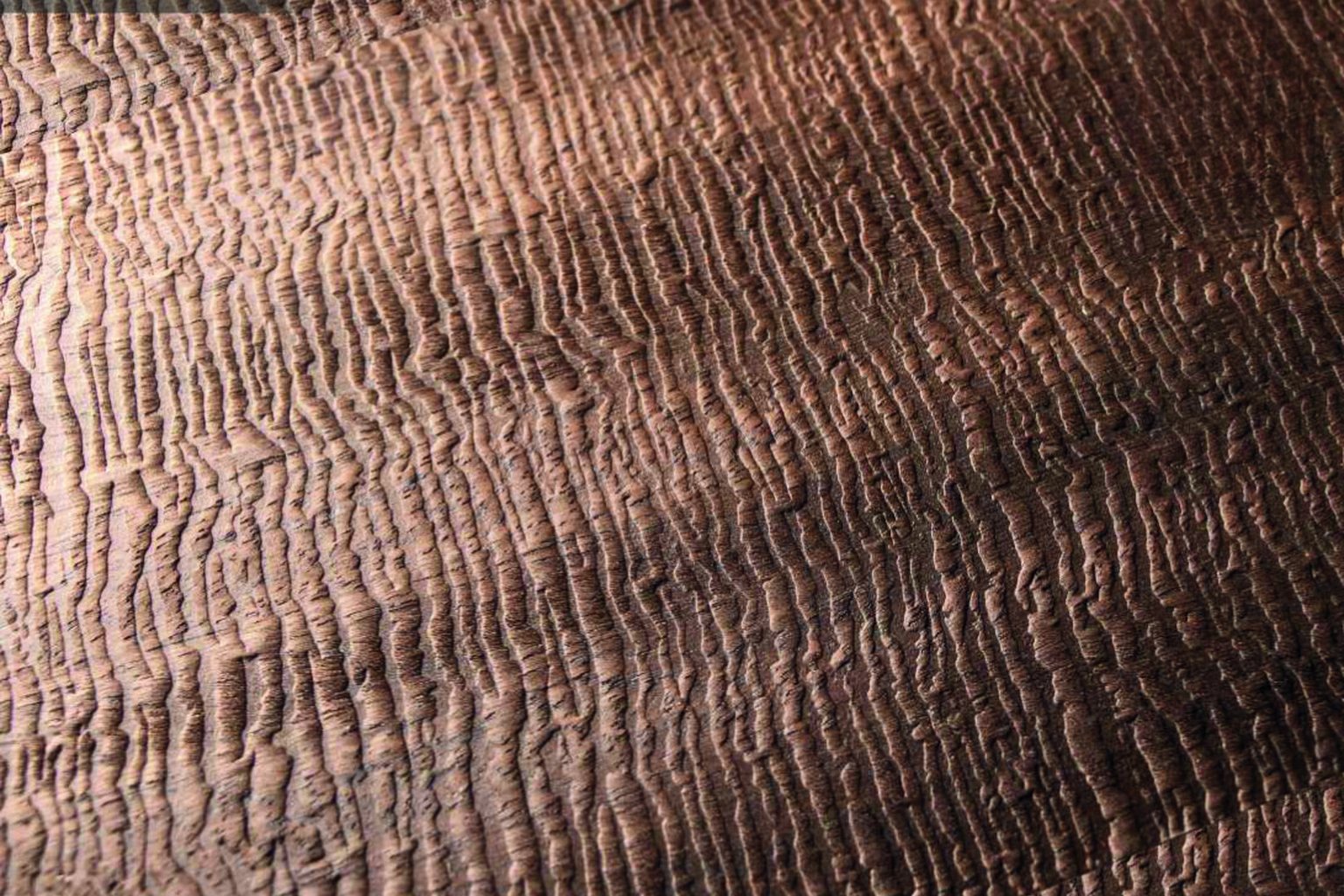
That charge is polishing. A veneer sheet quoted at 300 rupees per sq ft is not a 300 rupee surface. It is raw wood. It has to be sanded, filled and finished on site, and that adds somewhere between 80 and 150 rupees per sq ft depending on whether you use melamine, PU or lacquer. Laminate arrives finished. Nobody mentions this at the quotation stage, and it is the single biggest reason veneer budgets overrun.
Veneer vs Laminate: The Short Answer
| Laminate | Natural veneer | |
|---|---|---|
| Material rate | Rs 30 to 95 per sq ft (1mm) | Rs 180 to 600 per sq ft |
| Finishing | Included, arrives finished | Rs 80 to 150 per sq ft extra |
| Realistic installed rate | Rs 190 to 360 per sq ft | Rs 450 to 1,050 per sq ft |
| Water tolerance | Good on the face, weak at joints | Poor at the edges |
| Repairable | No, the panel gets replaced | Yes, sanded and re-polished twice over its life |
| Do two panels match? | Yes, identical print | No, grain varies sheet to sheet |
| Life in Kolkata | 10 to 15 years | 15 to 25 years if finished and maintained properly |
Those are market ranges observed in Kolkata in July 2026, excluding GST. Rates move with brand, thickness and substrate, so treat them as a planning guide and ask for current numbers before you budget.
What You Are Actually Choosing Between
Laminate is printed decorative paper pressed with resin into a hard sheet, usually 0.8mm or 1mm, which is then glued onto plywood or MDF. Print quality on the better Indian brands has improved a great deal over the last five years. A well-chosen 1mm woodgrain laminate on a wardrobe, seen from two feet away, is genuinely hard to tell from veneer.
Veneer is a thin slice of real timber, typically half a millimetre, glued onto a substrate and finished on site. It has actual grain because it is actual wood. Two sheets cut from the same log will differ from each other, which is either the whole point or a real problem depending on what you are building.
The third thing being sold as the second
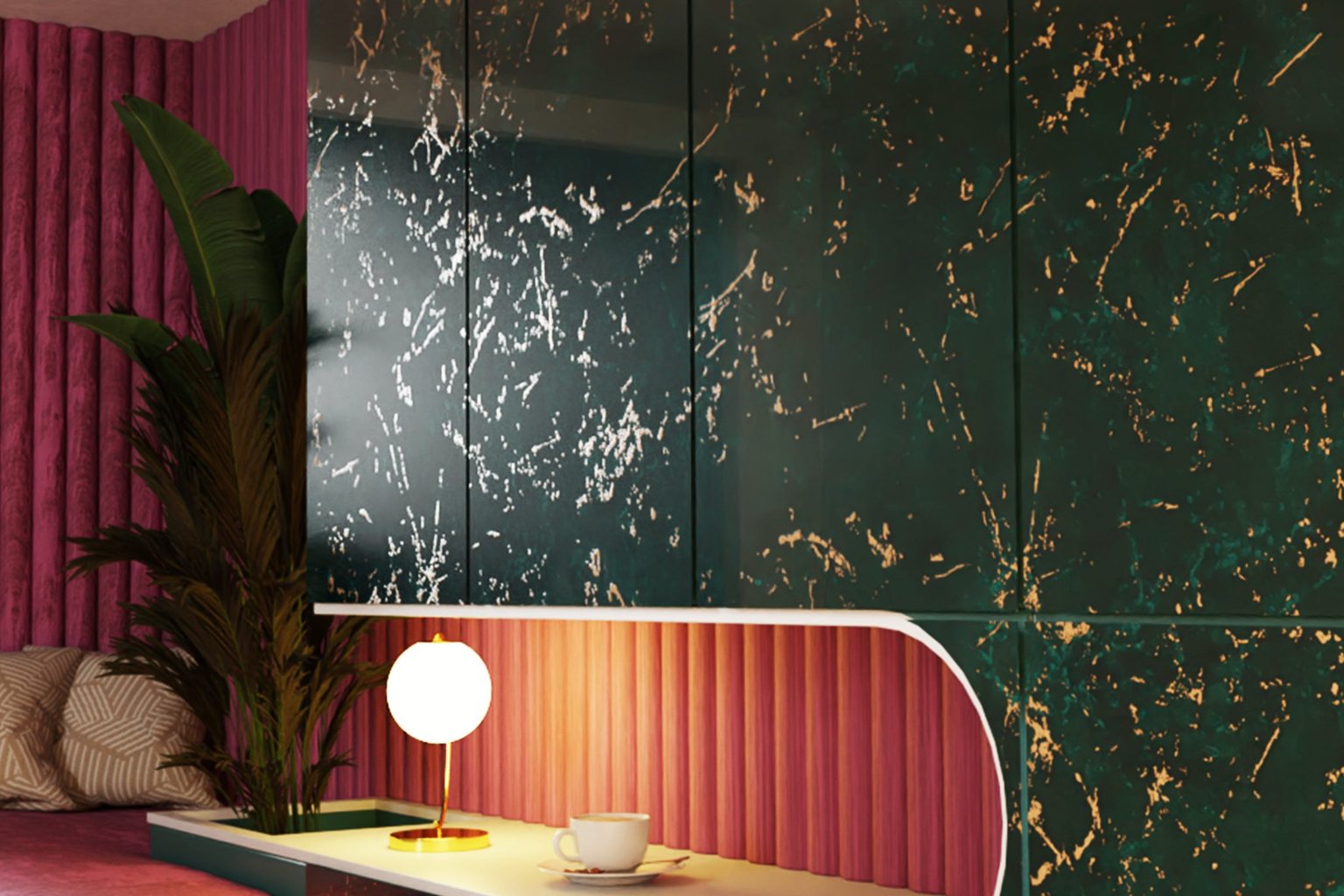
Engineered veneer, sometimes called reconstituted veneer, is fast-growing timber that has been dyed, laminated into a block and re-sliced to produce a consistent repeating grain. It is not a fraud in itself. For a twenty-shutter wardrobe wall where every panel must match, it is genuinely the better product. It becomes a fraud when it is billed at natural teak prices.
You can spot it. The grain repeats at a regular interval, the pattern is unnaturally even, and the sheet edge often shows a faint dye line rather than the pale-to-dark transition you get in real timber. Ask the question directly. A dealer who will not answer it straight has told you what you needed to know.
What It Costs Once You Add Everything Up
| Component | Laminate route | Veneer route |
|---|---|---|
| Substrate, 19mm BWR plywood | Rs 85 to 130 per sq ft | Rs 85 to 130 per sq ft |
| Surface material | Rs 30 to 95 per sq ft (1mm) | Rs 180 to 600 per sq ft |
| Adhesive and pressing | Rs 12 to 20 per sq ft | Rs 12 to 20 per sq ft |
| Finishing and polish | Included | Rs 80 to 150 per sq ft |
| Edge banding | Rs 18 to 35 per running ft | Rs 40 to 90 per running ft, matching lipping |
| Carpentry labour | Rs 60 to 110 per sq ft | Rs 90 to 160 per sq ft |
| Realistic all-in | Rs 190 to 360 per sq ft | Rs 450 to 1,050 per sq ft |
Two lines in that table deserve attention. Veneer carpentry costs more because it is less forgiving, and matching lipping, meaning solid timber edging that continues the grain, is what separates a job that looks expensive from a job that looks like laminate with extra steps.
Over ten years the gap narrows without closing. Veneer can be sanded and re-polished, usually twice, at roughly 100 to 160 rupees per sq ft, which turns a tired surface back into a good one. Laminate cannot be refinished. When it delaminates at an edge or takes a deep scratch, the panel gets replaced. Whether that matters depends on how long you plan to keep the interior, and most Indian homeowners redo interiors on a ten to fifteen year cycle.
Where Veneer Earns Every Rupee
There are a handful of places where I would argue for veneer without hesitation.
Any surface at eye level in a room where people sit for a long time. The dining room feature wall, the headboard wall, panelling behind a sofa. Real grain reads differently at close range and it improves with age rather than merely surviving it. This is the one situation where the difference is not subtle.
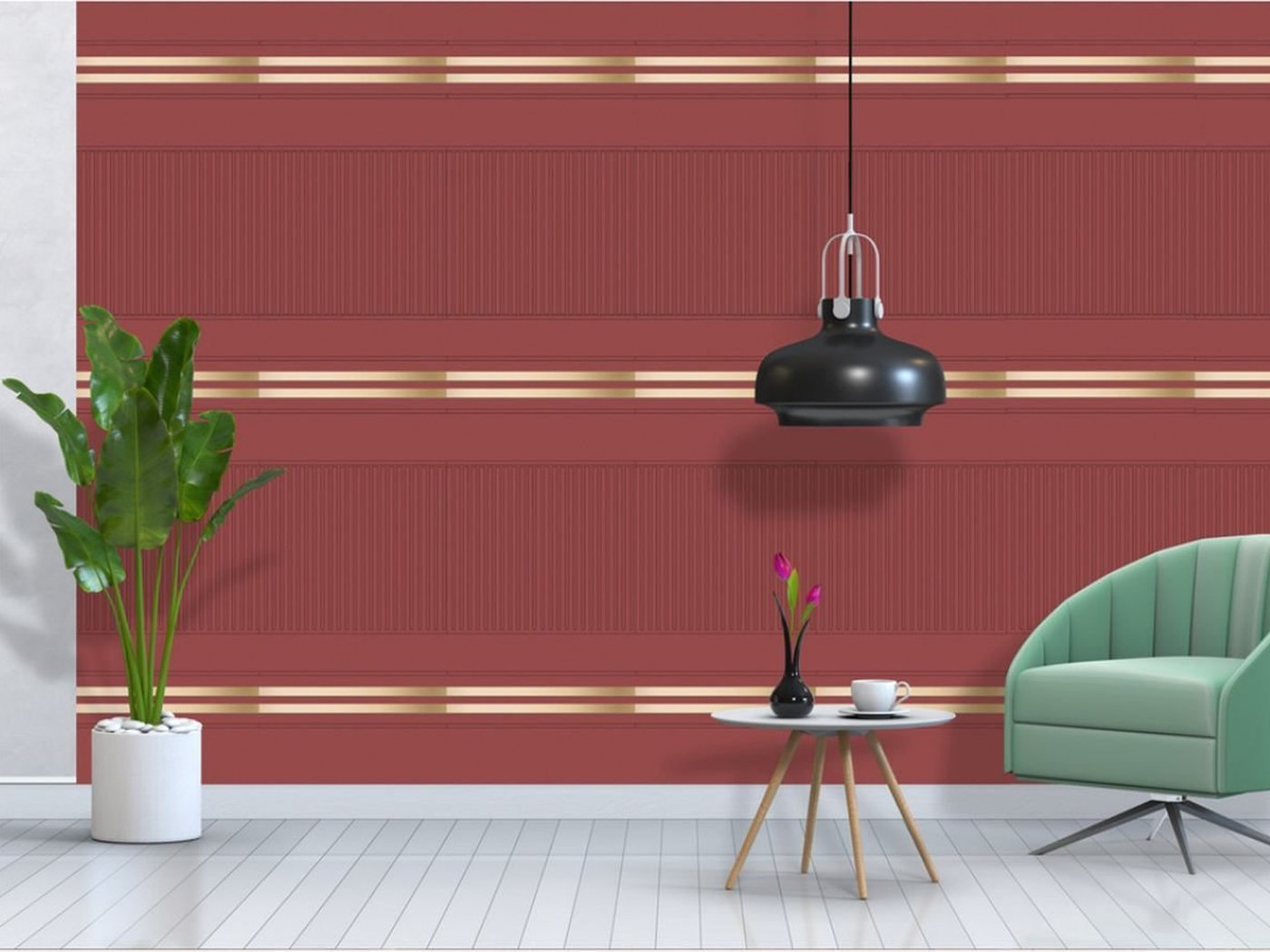
Large continuous surfaces where the grain must run across several panels. Book-matched or sequence-matched veneer across a six-metre wall is something laminate physically cannot do. It means buying enough sheets from one flitch, which costs more and needs planning, but the result is the most impressive thing you can do with a wall.
Furniture you intend to keep. A dining table, a study, a bar unit. Things that will be re-polished rather than thrown out.
Everywhere else, and I mean this, laminate is the sensible call, and the difference in the finished room is smaller than the difference in the bill.
Five Places I Would Not Specify Veneer in Kolkata
This city sits above 80 percent relative humidity for four months of the year, which changes the arithmetic in ways that generic national advice ignores.
Kitchen shutters below the counter. Water, steam and daily wiping. Veneer edges lift. Use a high-gloss laminate or acrylic and spend the saving on better hinges.
Bathroom vanities. Same reason, worse conditions.
The bottom 200mm of any wardrobe sitting flush on the floor. Moisture wicks up through the plinth. If the bottom edge is left unbanded, and it very often is, the panel swells from underneath where nobody looks until it has already failed.
Balcony-adjacent and north-facing walls in older Kolkata buildings, where seepage through the masonry is common. Check the wall before you specify anything at all.
Any surface a tenant will use. Veneer rewards a careful owner and punishes neglect, and rented flats rarely get the former.
How Not to Get Overcharged
A few things worth knowing before you walk into any showroom, ours included.
Laminate thickness is where the quiet substitution happens. A 0.8mm sheet billed as 1mm is a common enough switch, and the difference in the finished job is real, because 1mm resists impact and edge chipping noticeably better. Ask to see the sheet and check the printing on the reverse, where reputable brands print thickness and batch.
Shade consistency across batches is a genuine problem rather than a dealer excuse. The same decor code from the same brand varies between production runs. If your job needs forty sheets they should come from one batch, and that has to be specified when you order, not discovered at installation. We hold batch numbers against project orders for exactly this reason.
On veneer, ask for the species by name rather than by colour. American walnut, Indian teak and Burma teak are different products at different prices, and the word walnut on its own tells you nothing.
Get the polish written into the quotation with the system named. PU, melamine and lacquer differ in cost, cure time, smell and how they age. A quotation that says polish extra is a quotation that will grow.
Come and Hold Both
Photographs settle nothing here. A good natural teak veneer and a good 1mm laminate look identical on a screen and completely different in your hand.
We keep full sheets rather than the small chips most places show, which matters, because a 50mm sample tells you nothing about how a grain will read across a wardrobe. Browse the veneer range and the laminate range before you come, then bring your plywood specification and your drawings and we will tell you plainly where veneer is worth it and where it is not.
PROVO, 10 East Topsia Road, Ground Floor, Ideal Unique Centre, Kolkata 700046. Monday to Saturday, 10:00 am to 7:30 pm. Call +91 91477 56063 or request a sample set. If you are planning a kitchen alongside the cabinetry, our German Schuller kitchens are specified from the same showroom, and there are more material guides in the design journal.